
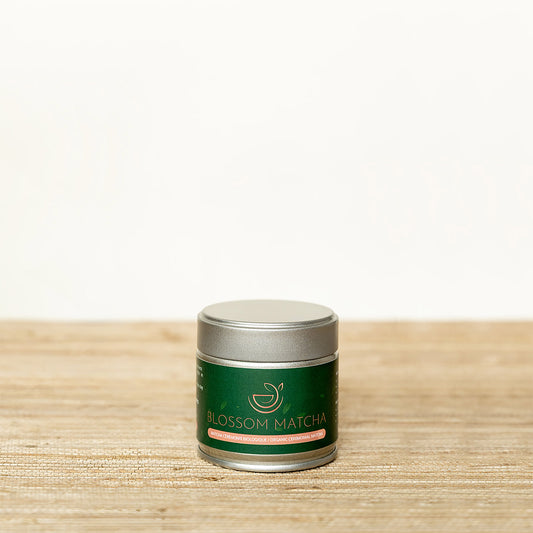
Matcha tea powder

Here, you'll find only one matcha because we didn't want to compromise. Hand-picked in Shizuoka, JASCERT organic certified, slowly ground with a granite millstone. The result? A smooth, creamy cup, with no bitterness. Exactly what matcha should be.

Why this matcha is truly different

Many matchas look alike in photos. But behind the packaging, everything changes. The color, the taste, the effects... it all depends entirely on what happened in Japan, even before the leaf was ground. Here's what lies behind every gram of our premium organic matcha powder.

The First Shincha Harvest: Why It Changes Everything

Shincha is the first harvest of the year, usually in April-May. This is when the leaves are the youngest, tenderest, and richest in umami and nutrients. Lower-grade matchas use later harvests, which are more abundant but much less intense. With Shincha, you get the best the tea plant can offer.

20 to 30 Days of Shading: The Secret to Sweetness and Umami

A few weeks before harvesting, the tea plants are covered to protect them from direct sunlight. This process, lasting 20 to 30 days, forces the plant to produce more chlorophyll, L-theanine, and antioxidants to capture any available light. This is precisely what gives matcha its vibrant green color and its sweet, enveloping taste. No shading? Guaranteed bitterness.

Slow Grinding with Granite Millstones: 1 Hour for 40g, It's Worth It

The Tencha leaves (the dried leaves after shading, before grinding) are ground into powder using granite millstones, slowly, without ever heating. 1 hour of work to produce only 40g of powder. This is intentional. Fast industrial grinding generates heat that destroys some of the aromas and nutrients. Here, every molecule is preserved.

What you're really swallowing in your cup

Matcha isn't infused tea. You consume the entire leaf in powder form, which means you ingest all the nutrients, leaving nothing behind in a tea bag. This is concretely what you're drinking.

EGCG and Antioxidants: 137x more than green tea

Matcha contains 137 times more antioxidants than a regular brewed green tea. These antioxidants, primarily EGCG (epigallocatechin gallate), help the body fight against cellular oxidation, which plays a role in recovery, aging, and cell protection. No jargon: your body fights daily stress, and matcha provides it with strong tools to do so. And if you want to explore how it can also support your figure, discover the benefits of matcha for weight loss.

L-theanine: focus and serenity without the crash

L-theanine is an amino acid found almost exclusively in tea. It promotes concentration, mental clarity, and a state of active calm — without the jitters that coffee can cause. Combined with the naturally occurring caffeine in matcha, it creates stable and lasting energy, without sudden peaks or crashes. This is often what convinces heavy coffee drinkers to make the switch. Are you wondering if matcha can really replace your coffee? Test our matcha vs. coffee calculator to see the exact equivalent.

Chlorophyll, Vitamins, and Minerals: The Complete Profile

Because you consume the entire leaf, nothing is lost in the brewing water. Your matcha contains:

  • Chlorophyll: for natural detox support
  • Fiber: for digestive comfort
  • Vitamins C, E, K, B1, B2, B3, B6: cell protection and energy
  • Minerals: iron, magnesium, zinc: for muscles, the immune system, and overall balance

    A brewed tea leaves all of this behind in the empty cup. Not matcha.

Certified organic, traceable, honest

We're not asking you to take our word for it. There's an important certification behind every sachet.

What exactly is JASCERT certification?

JASCERT is one of Japan's leading independent organic certification bodies. Their role is to verify that cultivation is carried out without pesticides or chemical inputs, according to Japanese organic standards, which are among the strictest in the world for tea. When you see this logo, you know that the tea plants have been grown cleanly, from the soil to the leaf.

  • Measure out ½ teaspoon of powder into your bowl

  • Add 60 to 80 ml of hot water at 70–80°C (boiling water burns the aromas and accentuates bitterness)

  • Whisk with a Chasen (traditional bamboo whisk) or an electric frother, using rapid "W" shaped movements, until a light and even foam is formed

1 of 3

Want to go further in the art of preparation? Also discover the technique of Koicha, thick matcha, a sensory experience in its own right.

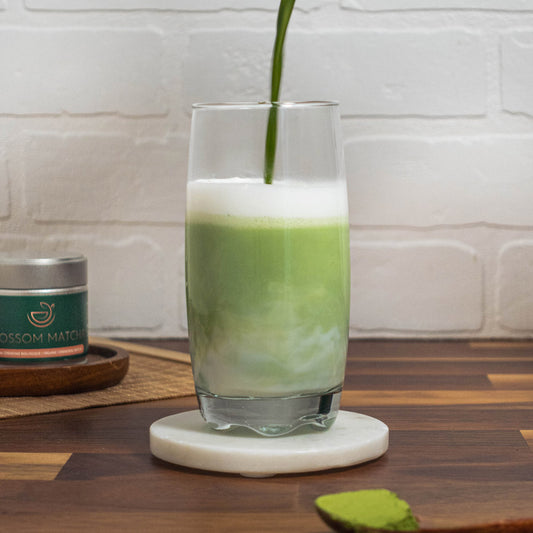
Matcha latte: the quick plant-based milk recipe

Using the same base as Usucha, prepare your matcha with a little hot water, then add your hot or cold plant-based milk. We recommend oat or almond milk: they are mild enough not to overpower the umami taste of matcha. In 3 minutes, you'll have a creamy, caffeine-free, and bitterness-free drink.

What our customers are saying

Your questions about premium organic matcha

How to identify premium, high-quality organic matcha?

A premium organic matcha can be recognized by several concrete signs. The color should be bright and intense green, not pale or yellowish. The texture should be ultra-fine, almost silky to the touch. In the cup, it should be smooth and without bitterness, with a distinct umami note. Key criteria to check:

  • Certified Japanese origin (not just "inspired by Japan")
  • Ceremonial grade (not culinary)
  • First harvest Shincha (April-May)
  • Independent organic certification (JASCERT, Canada-Bio, etc.)
  • Slow stone mill grinding

If even one of these criteria is missing, that's often where the quality drops.

What are the benefits of premium organic matcha compared to standard matcha?

The difference is not just marketing. A premium matcha from the first harvest with shading naturally contains more L-theanine, EGCG, and chlorophyll than a late-harvest matcha. The absence of pesticides (guaranteed by organic certification) also eliminates chemical residues found in many industrial matchas. In practice, this translates to:

  • Significantly higher antioxidant concentration (up to 137x more than standard green tea)
  • More stable energy thanks to the caffeine + L-theanine combination
  • A truly bitterness-free taste, no need to add sugar
  • Zero pesticides from field to cup

Standard matcha often uses 2nd or 3rd harvest leaves, industrially ground. The result is pale, bitter, and significantly less concentrated in nutrients.

What is the difference between ceremonial matcha and organic premium matcha?

Ceremonial grade refers to matcha designed to be drunk plain, without milk or sugar. Its organoleptic quality must stand on its own. The term "premium organic" is used very loosely in the market, with highly variable quality levels. At Blossom Matcha, the two are intentionally combined: a single product, designed to be both ceremonial and certified organic. No compromise between the two. To delve deeper into this distinction, we have detailed the complete difference between ceremonial matcha and culinary matcha.

Why is Shizuoka matcha considered high-grade?

Shizuoka is Japan's largest tea-producing region, accounting for approximately 40% of the national output. Its altitude, temperate climate, and ancestral know-how create ideal conditions for a distinctive matcha. The region is often overshadowed by Uji (Kyoto) in Western marketing, yet it produces some of the country's best matchas. Less known to the general public, more honest in its reputation.

How long does matcha last?

An open matcha can be kept for 3 to 6 months without noticeable loss of quality. The rule: store it in an airtight container, away from light, heat and humidity. The Blossom Matcha packaging is designed precisely for this: airtight and opaque, it preserves the vibrant color and aromas down to the last gram.

Can matcha replace coffee daily?

Yes, and it's often the smoothest transition you can make. The natural caffeine + L-theanine combination in matcha provides stable energy, without the peak of excitement or the crash that often follow a coffee. 1 to 2 cups a day are enough to feel the difference. If you want to know precisely how much matcha corresponds to your current coffee consumption, use our matcha vs coffee calculator. And if you have questions about consumption during pregnancy, consult our guide on matcha consumption during pregnancy.